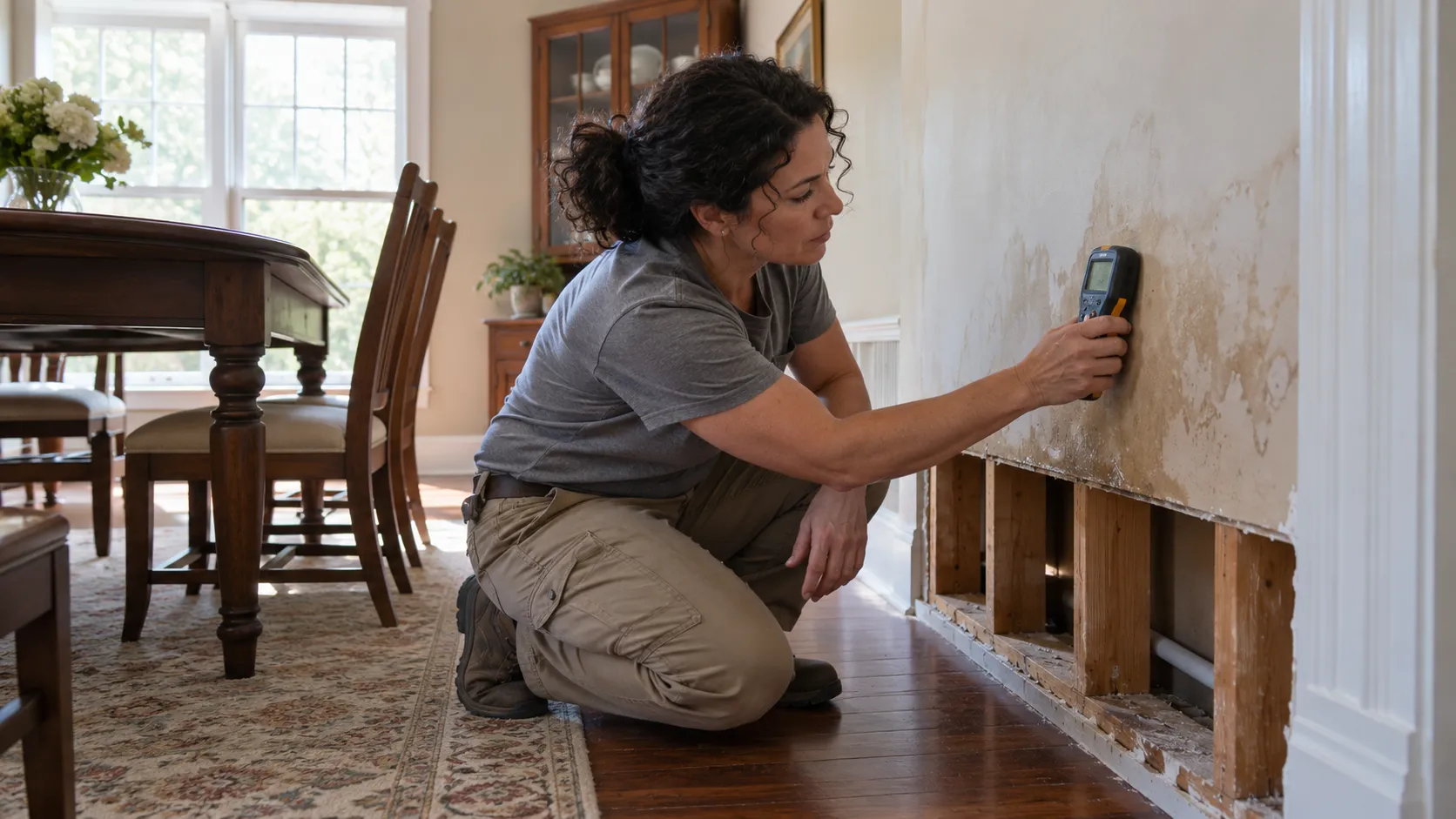
Water damage restoration is the full process of bringing a home back to normal after a leak, burst pipe, appliance failure or storm. It starts with finding the source and checking how far the water has spread. It ends with repairs that put walls, floors and cabinets back the way they were.
Processsuggesting Restoration is a referral service. When you call, we connect you with an independent local restoration provider in the Greater Atlanta area. The provider inspects the damage, explains what needs to be removed or repaired, and gives you a written estimate. You stay in control of the decisions. Many providers can also help you document the damage for an insurance claim, which can make the process easier if your policy applies. Before work begins, ask what will be removed, what can be saved and how long the job should take.
Water Damage? Start Here
If water is spreading in your home right now, focus on safety and stopping the source. Turn off the main water valve if a pipe or fixture is leaking. Stay away from standing water near outlets, cords or appliances. If you can reach the breaker panel from a dry spot, switch off power to the affected area.
Then get help on the way. Water moves fast. It soaks into drywall, wicks up baseboards and seeps under flooring. The sooner a restoration provider can look at the damage, the more of your home can usually be saved.
Why Time Matters With Water Damage
Water damage gets worse in stages. Knowing what happens over time helps you see why acting early matters.
The First Few Hours
Water spreads across floors and into the low points of the room. Carpet and pad start to soak. Drywall begins to wick moisture upward. Furniture legs and cabinet bases can stain and swell.
The First One to Two Days
Drywall softens and may start to crumble. Wood floors can cup and warp. Doors and trim swell. A musty smell often appears. In warm, damp conditions, mold can begin to grow.
After Several Days
Mold growth can spread inside walls and under floors. Wood framing may start to weaken. Repair costs often climb because more materials need to be removed and replaced.
The goal of water damage restoration is to stop this chain early and return your home to a safe, dry and finished state.
What Water Damage Restoration Covers
Restoration is more than drying things out. It's the full path from the first inspection to the final repair. A typical restoration job includes:
- Inspection and source check. The provider finds where the water came from and makes sure it has stopped.
- Moisture mapping. Meters and sensors show where water has traveled, including inside walls and under floors.
- Removing damaged materials. Soaked carpet pad, swollen baseboards and soft drywall are often cut out and removed.
- Cleaning and sanitizing. Affected areas are cleaned to reduce odors and the risk of bacteria and mold.
- Repairs and rebuilding. New drywall, paint, trim, flooring and cabinet parts are installed as needed.
The provider will explain which steps your home needs. A small leak may only need a few of these. A large loss may need all of them.
Types of Water and Why They Matter
Not all water is the same. Restoration providers usually sort it into three groups, and the type affects how the job is handled.
Clean Water
This comes from a supply line, a faucet or rainwater. It's the least risky, but it can turn dirty if it sits too long or soaks through dirty materials.
Gray Water
This comes from washing machines, dishwashers or toilet overflows without waste. It may contain soap, food or other contaminants. More materials may need to be removed.
Black Water
This comes from sewage backups or outside floodwater. It can carry bacteria and other harmful contaminants. Porous items it touches, like carpet and drywall, are usually removed and thrown away. Keep children and pets away from it.
If you're not sure what kind of water you're dealing with, tell the provider what happened. They can help sort it out.
Working With Your Insurance
Many homeowner policies cover sudden and accidental water damage, such as a burst pipe or a failed water heater. Damage from slow leaks or outside flooding is often treated differently. Every policy is different, so check yours and call your insurer early.
Here's what helps:
- Take photos and videos of the damage before anything is removed.
- Keep damaged items until your adjuster says it's okay to throw them away.
- Save receipts for any emergency costs, like fans or hotel stays.
- Ask the provider for written notes and moisture readings.
Providers can often help document the damage for your claim. Your insurer makes the final decision on what is covered.
Choosing a Restoration Provider
When you're connected with a provider through Processsuggesting Restoration, you are talking with an independent local business. It's smart to ask a few questions before work begins:
- Are you licensed and insured for this work in Georgia?
- How will you measure moisture and decide when drying is done?
- What will you remove, and what can be saved?
- Can I get a written estimate before you start?
- How will you keep me updated?
A clear answer to each of these is a good sign. You're never obligated to hire the first provider you speak with.
Getting Your Home Back to Normal
The last part of restoration is the part you'll see most: the repairs. Once the structure is dry, the provider can patch or replace drywall, prime and paint, reinstall baseboards, and repair or replace flooring. Some providers handle this rebuild work themselves. Others work with local contractors. Ask how your provider handles it so you know what to expect.
When the work is done, walk through the space with the provider. Check that the finishes look right, that smells are gone and that there are no damp spots. Keep the paperwork for your records and your insurer.
Ready to get started? Call to check provider availability near you.
What's Included
Damage Inspection
The provider checks where the water came from, confirms it has stopped and looks at every affected room.
Moisture Mapping
Moisture meters and sensors show how far water has traveled into walls, floors and cabinets.
Removal and Cleaning
Damaged materials like soaked pad and soft drywall are removed, and affected areas are cleaned and sanitized.
Repairs and Rebuild
Drywall, paint, trim and flooring are repaired or replaced so your rooms look and work like before.
What Does Water Damage Restoration Cost?
Costs depend on how much area is affected, the type of water and how much needs to be rebuilt. The figures below are typical U.S. ranges and vary by job, so always ask for a written quote.
| Item | Typical range | Notes |
|---|---|---|
| Small leak, one room | $500 – $2,000 | Clean water caught early, little rebuild |
| Average restoration job | $1,500 – $6,000 | Several rooms or some drywall and flooring repair |
| Major water loss | $7,000 – $20,000+ | Large area, long exposure or dirty water |
| Per square foot (clean water) | $3 – $5 | Higher for gray or black water |
| Drywall removal and replacement | $2 – $5 per sq ft | Includes taping and paint prep |
| Mold treatment, if needed | $1,000 – $5,000 | Depends on spread and location |
How It Works
1. Call Processsuggesting Restoration
Tell us what happened and where you are. We connect you with a local restoration provider.
2. Inspection and Estimate
The provider checks the damage, maps the moisture and gives you a written estimate.
3. Removal, Cleaning and Drying
Damaged materials are removed, the area is cleaned, and the structure is dried out.
4. Repairs and Walkthrough
The provider repairs walls and floors, then walks through the finished work with you.
Why Call Processsuggesting Restoration
Faster Connection
One call routes you to a local provider, so you spend less time searching while water spreads.
Local Knowledge
Providers in our network work in the Greater Atlanta area and understand how homes here are built.
Written Estimates
Ask the provider for a written estimate before work begins, so you know what to expect.
Your Choice
There's no obligation to hire. Ask questions and decide what's right for your home.